Dream Road: Online
- 4.4
- Rating
- 10.00M
- Installs
- Free
- Price

 Analysis by App-foxy
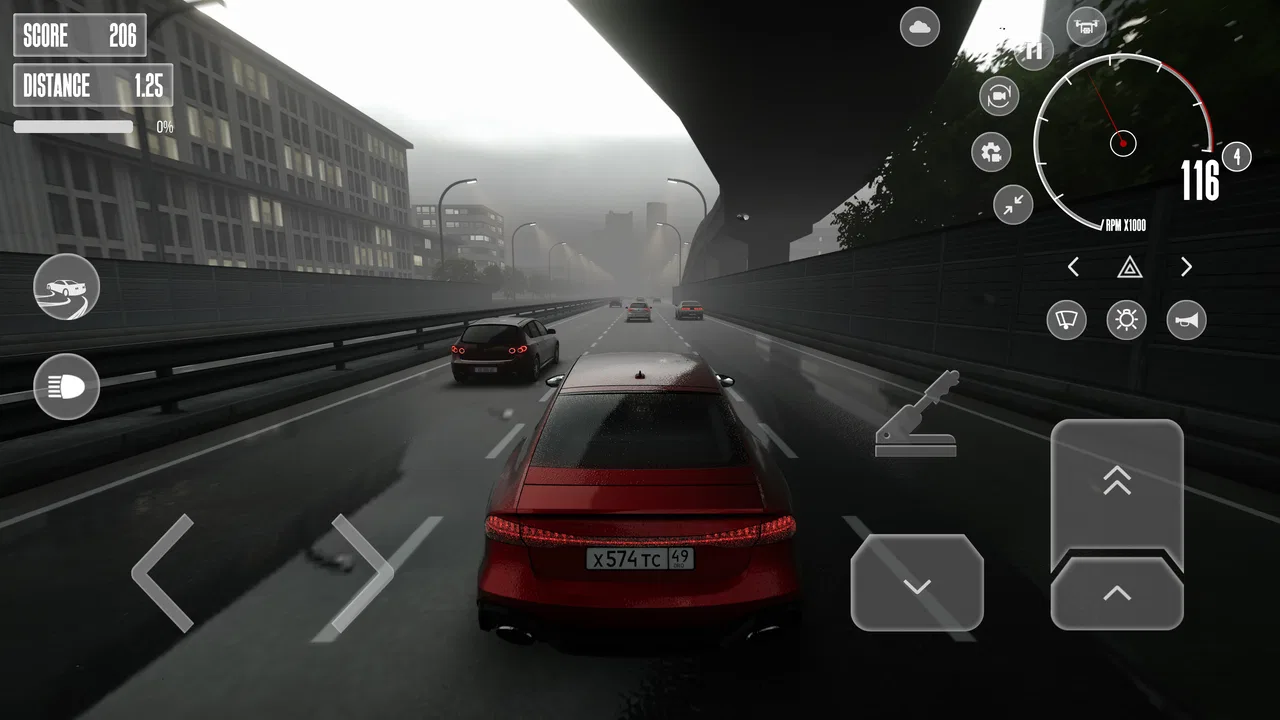
Dream Road: Online is the kind of racing game I open when I want a quick drive rather than a serious simulation session. It comes from ARDENT GAMES and places car tuning and city racing at the center of the experience. The basic appeal is easy to understand: adjust a car, head into an urban setting, and compete with friends. What matters in practice is whether the game gets you from the first launch to an enjoyable race without unnecessary friction.
I found the game most appealing as a casual mobile racer. It is free, rated for Everyone, and available for devices running Android 7.0 or later. That makes it approachable for a broad audience, including players who do not want a demanding racing simulator. At the same time, the online focus means your enjoyment depends on more than steering. Connection quality, a properly prepared device, and knowing where to look when a session does not behave as expected all matter.
The public response is encouraging: Dream Road: Online holds a 4.4 average from around 22 thousand ratings and has passed five million installs. Those figures suggest that the game has reached a substantial audience, but they do not remove the need to judge it on your own habits. A player seeking deep simulation physics may want something more specialized, while someone who enjoys short city races and car personalization will probably understand the attraction quickly.
You May Also Like

 Blood Strike: 2.5 Anniversary
Blood Strike’s Loadouts Turn Every Drop Into a Tactical Gamble
A close look at Blood Strike’s custom loadouts: how fast access to signature weapons reshapes its battle royale rhythm, rewards preparation, and narrows the gap between fights.

 Pandora - Music & Podcasts
Pandora’s Music Is Easy to Start, but Harder to Recover
Pandora’s strength is its low-effort path from a seed to a station. Its weak spot is how much confidence it asks you to place in connection, setup, and quiet recovery.

 8 Ball Pool
 Is Built on Rivalries, Rematches, and Routine
A close look at the rivalries, rematches, shared routines, and unanswered safety questions that turn a quick pool match into a persistent mobile community.

 Samsung Music
’s Quiet Strength Is Playing What You Already Own
Its reach comes less from spectacle than from dependable access to a personal library. That simplicity is both the app’s strongest retention engine and its ceiling.

 AccuWeather: Weather Radar
AccuWeather Review: A Quick, Clear Forecast for Everyday Decisions
For everyday plans, the best forecast is the one you can understand quickly. AccuWeather makes rain timing, radar, and local conditions easy to act on, with a few trade-offs.

 Hill Climb Racing
Why Hill Climb Racing Still Turns Crashes Into One More Run
A tiny car, a bumpy hill and one more upgrade: Hill Climb Racing keeps resurfacing because its simple chaos makes every near-miss feel personal.
More From Our News Desk



Getting from the first launch to a useful race
I’d treat the first launch as a quick setup session, not a race to tap through every screen: let the game finish loading, check that your connection is steady, and look over the available prompts before changing cars or joining others. That gives you a clearer baseline for judging how the controls feel. Once the basic flow makes sense, the next useful step is deciding whether its free access delivers the kind of racing you actually want.
Where new players are most likely to get stuck
The first point of friction is usually not the driving itself. It is the transition between installing the game, reaching the main racing area, and understanding what the next useful action is. A racing game can feel unresponsive when the player is still waiting for a connection, looking for a mode, or trying to work out whether a car change has actually been applied. I recommend taking a moment to read each visible prompt instead of tapping repeatedly, especially during the first session.
Because the game is built around racing with other people, an online step can become part of the normal starting routine. If a race does not appear immediately, I first check whether the device is connected to a stable network and whether another app is consuming the connection in the background. Reopening the game after a failed attempt is often more sensible than repeatedly pressing the same button. This is simple advice, but it prevents a temporary connection delay from looking like a permanent game fault.
Another common stumbling block is expecting every car adjustment to produce an obvious change at once. Tuning is more useful when treated as a process: make one change, drive, notice how the car feels, and then decide whether another adjustment is worthwhile. Changing several things together makes it difficult to understand what helped or hurt. Use small, deliberate changes rather than rebuilding the car blindly. That approach is especially helpful on a touchscreen, where a minor handling difference can be harder to read than it would be with a controller.
Checks I would make before blaming the game
Before settling into a racing session, I make sure the phone has enough free working space and that unnecessary apps are closed. I also check that the operating system meets the Android 7.0 requirement and that the game is updated to its current version, 1.3.5. These checks do not guarantee perfect performance on every phone, but they remove two avoidable sources of trouble: an incompatible system and an outdated installation.
If the game opens but behaves slowly, I lower the workload on the phone before assuming the servers or the game itself are responsible. Closing video, social, and browser apps can help on a device with limited memory. I avoid starting a race while the phone is already hot or charging under heavy use, because heat can make any demanding game feel less consistent. A short pause and a fresh launch can be more effective than changing settings at random.
Network preparation is equally important. Wi-Fi is not automatically better if the signal is weak or the network is crowded. A stable mobile connection can sometimes be preferable, while a busy public network may be a poor choice for an online race. I also avoid switching between networks during a session. That handover can interrupt a match and make it unclear whether the problem came from the game, the connection, or the device.
Sound and control checks deserve attention too. If the car appears to respond late, I test whether the delay occurs everywhere or only during online play. A general delay points toward the phone, touch input, or performance; a delay that appears only in online situations suggests a connection issue. Separating those cases saves time and gives a much clearer idea of what to fix.
A calmer workflow when a race goes wrong
When a session fails, I use a short recovery routine. I leave the current screen normally, wait a little, and try again once. If the issue remains, I close the game completely and reopen it with other demanding apps shut down. I then test a simple drive before making more tuning changes. This sequence helps establish whether the problem is a one-off connection interruption or something that follows the installation.
I would not repeatedly reinstall the game as a first response. Reinstallation can be disruptive and may not solve a network or device-performance problem. It is better reserved for a persistent startup issue after the basic checks have been completed. If you do reach that stage, make sure you understand how your progress is handled before removing the app. I would rather protect a working setup than erase it in the hope that a temporary fault disappears.
Tuning also benefits from a recovery workflow. If a new setup makes the car harder to control, return to the previous arrangement instead of continuing to modify unrelated parts. Keep mental notes about what you changed and in which type of race the difference appeared. Even without treating the game like a full engineering simulator, this habit turns tuning into useful experimentation rather than guesswork.
For online play, I prefer to test the connection before inviting friends into a session. A quick solo check, where available in the normal flow of the game, can reveal whether the phone is responding properly. If the game only misbehaves once other players are involved, I would test a different network and ask friends whether they are seeing the same interruption. That comparison is more informative than assuming the host device is always at fault.
When the game is not the cause
It is easy to blame Dream Road: Online when a race feels unfair or a car reacts strangely, but not every problem is a software problem. Touchscreens can register a finger differently when they are wet, when a thick protector interferes with contact, or when the player is holding the phone at an awkward angle. I get more consistent control when I hold the device securely and keep my steering movements measured rather than making frantic corrections.
Connection quality can also create misleading symptoms. A delayed opponent, a sudden change in position, or a race that fails to start may be caused by unstable communication rather than poor driving or a broken car setup. If the same behavior disappears on a stronger connection, that is a useful clue. The practical response is to change the network or move closer to the router, not to keep rebuilding the car.
Device limits matter as well. The minimum operating system requirement tells you whether the software can be installed, not whether every older phone will deliver the same experience as a newer one. Storage pressure, background activity, heat, and battery-saving behavior can all affect how a game feels. I would be cautious about judging the title after a single overheated session on a crowded phone.
There is also a difference between a design choice and a fault. A casual racing game may not provide the same level of vehicle detail, realism, or control precision as a dedicated simulation. If you prefer strict racing lines, extensive technical adjustments, or a highly realistic driving model, the simpler presentation may feel limited even when it is working correctly. That is a matter of fit, not necessarily a defect.
How I use the tuning and racing loop
The most satisfying way to approach the game is to treat tuning as preparation for a particular goal. I would not chase an imaginary perfect setup before learning the city environment. First, I would drive enough to notice where control feels comfortable and where the car becomes difficult to manage. Then I would make one adjustment and repeat the same kind of drive. This creates a practical connection between the garage and the road.
That method is especially useful for players who race with friends. Instead of changing cars simply because another player recommends a setup, I would consider how each person drives. A confident player who takes aggressive lines may value a different balance from someone who prefers steady, predictable movement. The important insight is that tuning should support your driving habits, not replace them.
A realistic everyday use case is a short evening session after work or school. I would connect to a reliable network, close background apps, make a quick car check, and play a few races with friends rather than planning a long uninterrupted campaign. The game suits that pattern because its central idea is immediately accessible: prepare a car and race around a city. It is less suitable if you need a long single-player structure that can be enjoyed entirely offline.
Another useful scenario is playing with a mixed-skill group. Newer players can focus on learning the controls and city routes while experienced friends experiment with tuning. To keep the session enjoyable, I would avoid turning every race into a technical test. Give beginners time to understand the car, and use adjustments to create variety rather than to make the gap between players impossible to close.
Where it stands beside other mobile racers
Compared with arcade racers that concentrate almost entirely on instant action, Dream Road: Online puts more emphasis on the relationship between the car and the city race. The tuning element gives me a reason to return to preparation instead of treating every event as identical. Its online orientation also makes it more naturally social than a racer designed mainly around solitary time trials.
On the other hand, players who want a highly structured career, a broad competitive system, or detailed simulation controls may find a dedicated alternative more rewarding. A traditional offline racer is the better choice when your connection is unreliable or when you want to play during travel without depending on other participants. A serious simulator is preferable when realistic vehicle behavior matters more than quick accessibility.
The free price lowers the barrier to trying it, but it does not mean the game will suit everyone. The real trade-off is convenience versus depth. I can see the appeal of a title that lets me get into a city race without studying a manual, yet that same simplicity may leave advanced racing fans wanting more layers. Knowing which side of that trade-off you prefer is more useful than relying on the rating alone.
Who should install it, and who should skip it
I would recommend Dream Road: Online to players who enjoy car-focused arcade racing, like making practical adjustments, and want the option to compete with friends. It is also a reasonable choice for families looking for an Everyone-rated racing game, provided the device and network are prepared for online use. The current version and broad Android compatibility make it easy for many players to give it a fair test.
I would skip it if your main requirement is a complete offline experience, highly realistic driving physics, or an elaborate long-term racing structure. I would also think twice if your phone regularly struggles with games, your connection is unstable, or you dislike troubleshooting before multiplayer sessions. Those conditions can turn the social side of the game into more work than entertainment.
My final view is positive but measured. Dream Road: Online works best as a straightforward social racer with a tuning layer, not as a replacement for a full simulation. ARDENT GAMES has made the central loop easy to understand, and the large player base shows that the concept connects with many mobile users. I enjoyed it most when I prepared one car carefully, kept my expectations realistic, and treated connection checks as part of the routine rather than an annoyance.
If you decide to try Dream Road: Online, start with a stable connection, a cool and uncluttered device, and modest tuning changes. Give the game a few races before deciding whether its handling suits you. That approach will tell you far more than the first launch screen: you will learn whether the city racing feels comfortable, whether the online rhythm fits your friends, and whether the balance between accessibility and depth is the one you want from a mobile racing game.
FAQs for Dream Road: Online
01What is Dream Road: Online and how does it work?
Dream Road: Online is an engaging multiplayer racing game available for both Android and iOS devices. Players can compete with others globally in a variety of challenging tracks. The game features stunning graphics, customizable vehicles, and a seamless online experience, making it a thrilling option for racing enthusiasts.
02Is Dream Road: Online free to play, and are there in-app purchases?
Yes, Dream Road: Online is free to download and play. However, it offers in-app purchases for players who wish to enhance their gaming experience. These purchases can include cosmetic upgrades, new vehicles, and other special features that can provide a competitive edge.
03What are the minimum device requirements to run Dream Road: Online smoothly?
To enjoy Dream Road: Online without issues, Android users should have at least Android 5.0, while iOS users need iOS 11.0 or later. The game also requires a stable internet connection to access its online features. Devices should have sufficient storage space and a decent processor for optimal performance.
04Can I play Dream Road: Online offline?
Dream Road: Online is primarily an online multiplayer game, so a stable internet connection is necessary to access most of its features. While you can explore some offline modes for practice, the core competitive elements and community interactions are only available online.
05How can I ensure my account is secure in Dream Road: Online?
To keep your Dream Road: Online account secure, use a strong, unique password and enable two-factor authentication if available. Avoid sharing your login details and be cautious of phishing attempts. Regularly updating the app ensures you have the latest security enhancements.
Pros
- Engaging multiplayer mode for endless fun.
- Stunning graphics enhance the gaming experience.
- Varied missions keep gameplay fresh and exciting.
- Customizable vehicles add a personal touch.
- Regular updates introduce new features regularly.
Cons
- Requires a stable internet connection to play.
- In-app purchases can be quite expensive.
- Some ads disrupt the gameplay experience.
- Battery consumption is relatively high.
- Occasional bugs can affect gameplay stability.

Dream Road: Online
Gallery